
Table of Contents
- The Perfect Storm: Three Ways Marine Environments Attack Pipelines
- Why Seattle, Tacoma, Portland, and Vancouver Face Elevated Risk
- Why Traditional Solutions Fail: Material Science Meets Marine Reality
- How Epoxy Resin Technology Creates a 50+ Year Barrier
- Beyond Repair Costs: The Total Value Proposition for Maritime Infrastructure
- Final Thoughts
The Pacific Northwest ports of Seattle, Tacoma, Portland, and Vancouver serve as critical gateways for North American-Asian trade, with the Northwest Seaport Alliance alone handling over 3 million TEUs annually. These bustling maritime hubs represent the visible face of global commerce—towering gantry cranes, massive container yards, and an endless procession of cargo vessels. Yet beneath this impressive infrastructure lies a hidden vulnerability that threatens operational continuity and environmental compliance: drainage pipelines subjected to the perfect storm of saltwater exposure, industrial runoff, and microbial activity. Traditional pipeline materials—concrete, corrugated metal, and cast iron—are deteriorating at accelerated rates in this hostile environment. The consequences extend far beyond repair costs. Terminal shutdowns can disrupt global supply chains worth billions of dollars, while leaking pipes risk NPDES permit violations and contamination of the pristine waterways that define the Pacific Northwest. This challenge demands more than reactive maintenance—it requires a fundamental shift in how port authorities approach infrastructure longevity. Advanced trenchless technology, specifically Cured-In-Place Pipe (CIPP) lining with epoxy resins, offers a solution backed by materials science and proven to deliver 50+ years of service life in the most corrosive environments. By understanding the mechanisms of saltwater degradation and the chemistry behind modern rehabilitation methods, facility managers and infrastructure planners can make informed decisions that protect both operational assets and the region’s environmental legacy.
The Perfect Storm: Three Ways Marine Environments Attack Pipelines
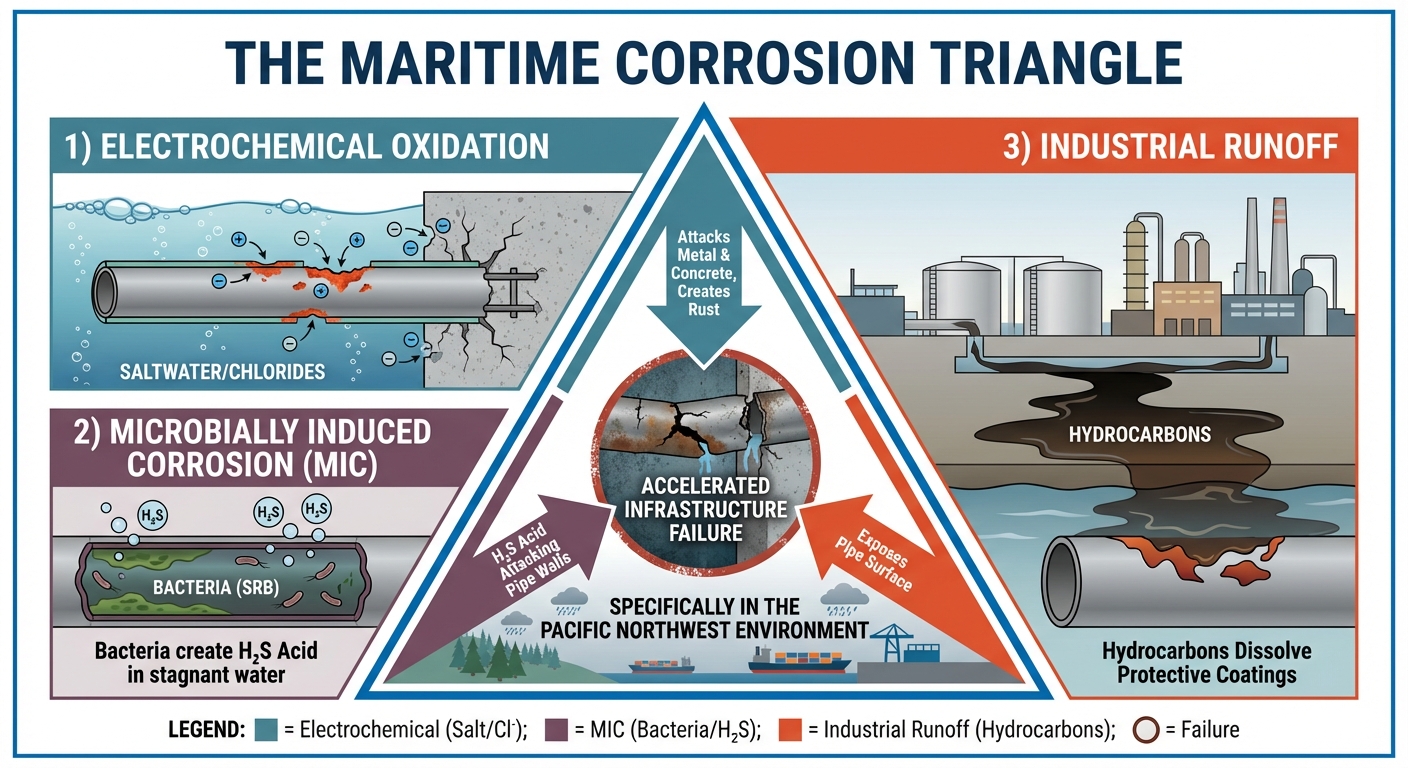
Maritime drainage systems face a unique combination of destructive forces that work synergistically to accelerate infrastructure failure. Understanding these mechanisms is essential for selecting rehabilitation solutions that address the root causes rather than merely delaying inevitable deterioration.
Electrochemical Oxidation: The Chloride Attack
Seawater’s high salt content creates a conductive electrolyte that drives one of the most aggressive forms of corrosion. Chloride ions penetrate protective films on metal surfaces, establishing electrochemical cells where electrons flow between anodic and cathodic sites. This isn’t a slow, uniform process—it manifests as localized pitting that can perforate pipe walls in a fraction of the expected service life. In concrete pipes, the damage is equally insidious but less visible. Chloride ions migrate through the porous concrete matrix to reach steel reinforcement bars. Once the protective alkaline environment around the rebar is compromised, oxidation begins. The rust that forms can expand up to four times the original steel volume, creating internal pressure that causes the concrete to crack and spall from within.
Microbially Induced Corrosion: The Invisible Threat
Tidal cycles create conditions ideal for sulfate-reducing bacteria to thrive in port drainage systems. During low tides, stagnant water pools in pipes, providing an oxygen-depleted environment where these microorganisms flourish. The bacteria consume sulfates present in seawater and excrete hydrogen sulfide gas. When this gas rises to the pipe crown and contacts oxygen, it oxidizes into sulfuric acid. This biogenic acid attack dissolves concrete and corrodes metal at rates that dwarf simple chemical exposure. In the estuarine environments of Puget Sound and the Columbia River, where fresh and saltwater mix, the conditions for microbially induced corrosion are particularly severe. Port authorities have documented concrete pipe wall thickness losses of several millimeters per year in affected sections—a rate that can reduce structural capacity to dangerous levels within a decade.
Industrial Runoff: The Amplifying Factor
Port drainage systems don’t just handle saltwater—they receive a complex chemical cocktail. Diesel fuel, heavy fuel oils, and hydraulic fluids from cargo handling equipment wash into catch basins with every rain event. These hydrocarbons attack asphalt and bituminous coatings on older pipes, dissolving protective layers that were never designed for such aggressive exposure. The combination is devastating. Physical abrasion from sediment, chemical attack from chlorides, biological acid production, and hydrocarbon dissolution work simultaneously. Each mechanism amplifies the others, creating degradation rates that render traditional pipe lifespan estimates obsolete. A concrete pipe designed for 50 years of service in a typical municipal application may fail in 15-20 years in a port environment.
Why Seattle, Tacoma, Portland, and Vancouver Face Elevated Risk
The Pacific Northwest’s maritime infrastructure operates under conditions that make corrosion control particularly challenging. Geographic, operational, and regulatory factors combine to create an environment where traditional pipe materials are fundamentally mismatched to the task.
The Northwest Seaport Alliance: Where Capacity Meets Chemistry
The merger of Seattle and Tacoma port operations into the Northwest Seaport Alliance created one of North America’s largest container gateways. The infrastructure supporting over 3 million TEUs annually must withstand extraordinary mechanical loads—gantry cranes that weigh hundreds of tons, top-pick container stackers that exert massive ground pressure, and the constant vibration of heavy equipment operation. But it’s the chemical environment that poses the greater long-term threat. Puget Sound’s brackish water creates variable salinity conditions, but the corrosive potential remains consistently high. The tidal cycles here are particularly problematic. The “wet-dry” exposure pattern—where pipes are alternately submerged and exposed—accelerates corrosion rates compared to continuous submersion. Each tidal cycle brings a fresh supply of dissolved oxygen and chlorides to the pipe surface, sustaining rapid electrochemical reactions. Despite significant capacity expansion in recent years, the underlying infrastructure maintenance challenge persists. The American Society of Civil Engineers assigned Washington State ports a “C+” grade, specifically noting concerns about aging drainage and stormwater systems that predate modern corrosion-resistant materials.
Columbia River Ports: Inland but Not Immune
Portland and Vancouver (Washington) sit dozens of miles from the open ocean, yet they face corrosion challenges rivaling coastal facilities. The Columbia River estuary brings tidal influences far inland, while agricultural runoff from the Willamette Valley adds nitrates to the chemical mix. Industrial discharge from manufacturing operations contributes heavy metals and organic compounds. This unique combination creates stormwater management challenges that standard municipal systems weren’t designed to handle. The pipes must resist not just saltwater corrosion but also the cumulative effect of agricultural chemicals and industrial contaminants. There’s another critical consideration: seismic resilience. The Cascadia Subduction Zone threatens the entire Pacific Northwest with the potential for a magnitude 9.0+ earthquake. Rigid concrete pipes are inherently vulnerable to seismic ground motion—they crack, separate at joints, and fail catastrophically. The aftermath of such an event would leave ports unable to safely discharge stormwater, potentially halting operations for months during the most critical phase of regional recovery.
The Economic Stakes
The Northwest Seaport Alliance’s cargo volume represents billions of dollars in trade value. A single loading lane shutdown can cascade through global supply chains, costing tens of thousands of dollars per day in lost productivity and delayed shipments. Infrastructure failures don’t announce themselves with convenient timing—they often occur during peak operational periods when repair access is most difficult and downtime costs are highest. These facilities also operate as federally secure zones requiring TWIC clearance for all personnel. Traditional excavation projects bring large crews and heavy machinery into secure areas for weeks, creating security management challenges and limiting operational flexibility. The longer a repair project takes, the greater the operational and security burden.
Why Traditional Solutions Fail: Material Science Meets Marine Reality
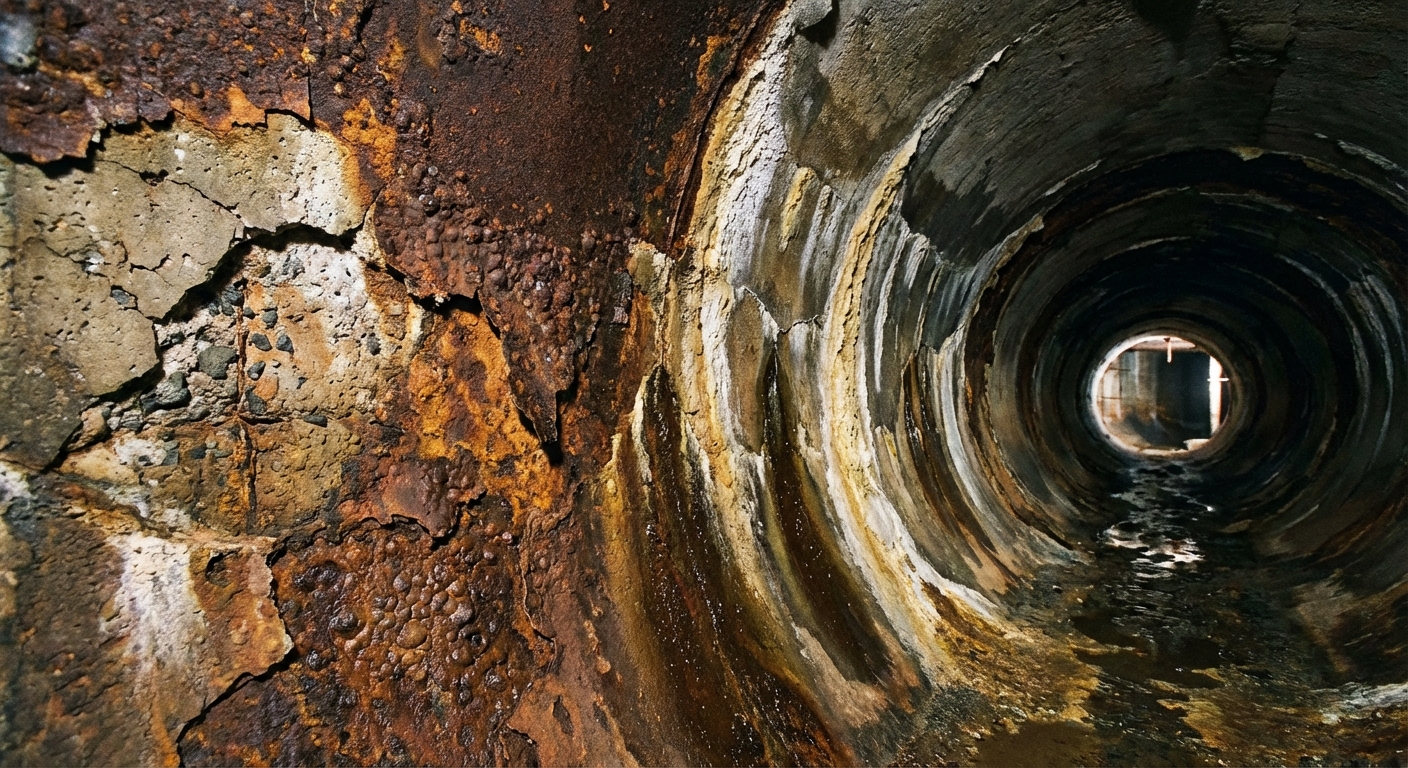
Understanding why conventional pipeline materials cannot provide durable service in maritime environments requires examining their fundamental chemical and structural properties. The failure patterns are consistent across port facilities worldwide—only the timeline varies.
Concrete: Porous and Vulnerable
Concrete pipe has served municipal drainage for over a century, but its performance in port environments reveals critical limitations. The material’s porous matrix allows chloride ions to penetrate toward embedded steel reinforcement. In high-salinity environments, chlorides can reach the rebar within 5-10 years despite standard cover depths. Once the alkaline protection around the steel is compromised, oxidation begins. The rust formation creates expansive forces that crack the concrete from within. These cracks then provide pathways for accelerated ingress of corrosive agents, creating a self-reinforcing degradation cycle. Microbially induced corrosion attacks the cement matrix itself. Sulfate-reducing bacteria in stagnant sections produce hydrogen sulfide, which oxidizes to sulfuric acid. This biogenic acid dissolves the calcium-based compounds that give concrete its strength. Laboratory studies show that concrete exposed to microbial sulfuric acid can lose 10-15mm of wall thickness per year—enough to compromise structural integrity within a pipe’s first decade of service. The jointed nature of concrete pipe creates additional vulnerabilities. Each joint represents a potential infiltration or exfiltration point. Even when properly installed, joint seals degrade over time, allowing groundwater to enter the system (increasing treatment costs) and industrial contaminants to escape into surrounding soil (creating environmental compliance risks).
Corrugated Metal: Sacrificial Protection That Runs Out
Corrugated steel pipe relies on zinc galvanization for corrosion protection. In freshwater or mild environments, this sacrificial coating can provide decades of service. In saltwater, the protective layer depletes in 10-15 years—sometimes less in areas of high flow velocity where mechanical abrasion accelerates zinc loss. Once the zinc layer is exhausted, the underlying steel corrodes rapidly through the same electrochemical processes that attack all metals in saline environments. Industry research comparing coastal versus inland installations of galvanized steel pipe shows service life reductions of 40-60% in marine applications. The corrugated profile, while providing structural strength, creates flow turbulence that increases sediment deposition and creates zones of stagnant water ideal for microbial growth. These conditions accelerate both biological and chemical corrosion.
Coating Systems: Protection Without Structure
Thin-film coating systems—epoxy paint, polyurethane, or bituminous coatings applied to the interior of existing pipes—offer temporary protection but cannot match the performance of structural liner systems. These coatings measure mere millimeters in thickness and are vulnerable to damage during installation, from debris impact, and from thermal cycling as pipes heat and cool. The hydrocarbons in port industrial runoff can dissolve bituminous coatings, creating spots where the underlying pipe is directly exposed to corrosive attack. Even intact coatings merely delay rather than prevent deterioration—they provide no load-bearing capacity and offer no solution once the host pipe structure itself begins to fail.
How Epoxy Resin Technology Creates a 50+ Year Barrier
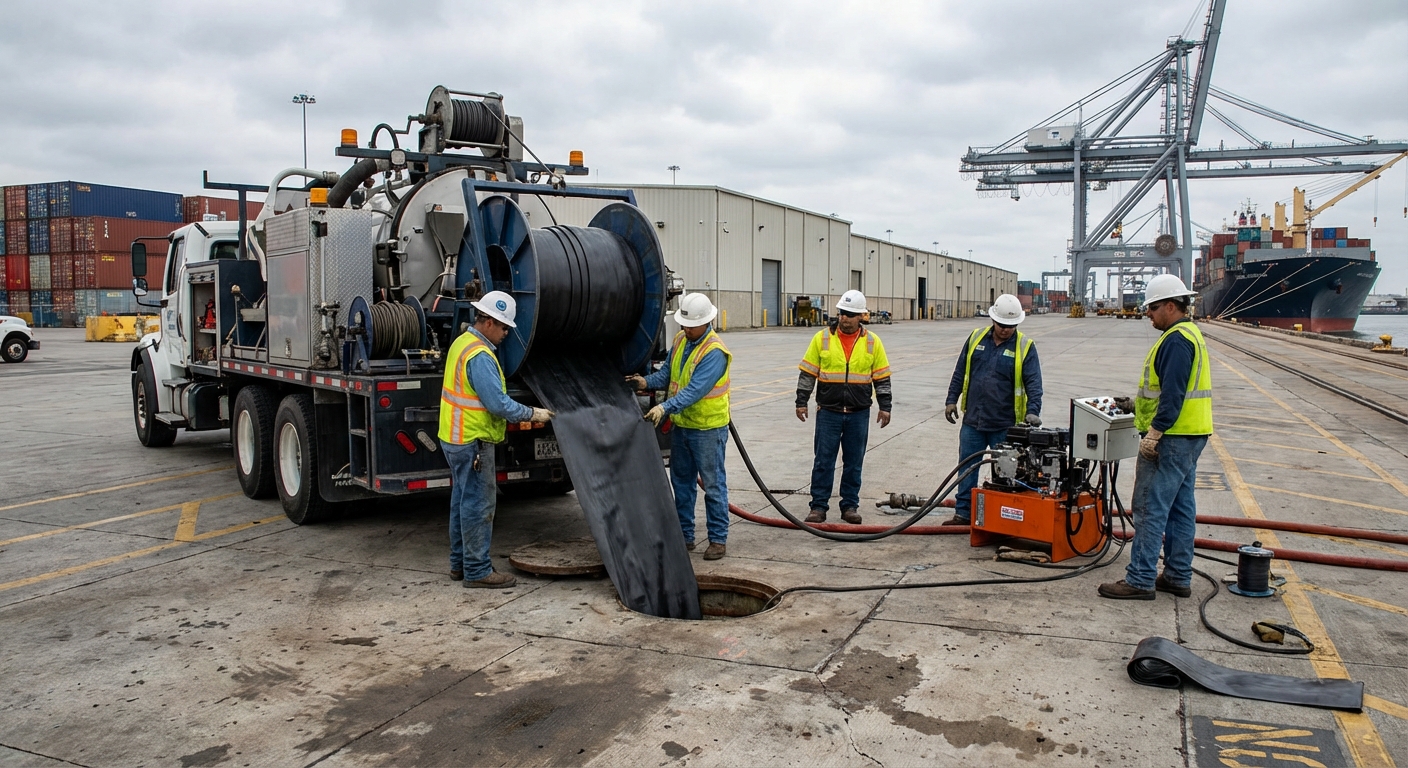
Cured-In-Place Pipe lining represents a fundamental departure from coating-based rehabilitation. Rather than applying a thin protective film to a deteriorating structure, CIPP creates a new, standalone pipe within the old one. The material science behind this technology—particularly 100% solids epoxy resin systems—directly addresses every failure mechanism that plagues traditional materials in maritime environments.
Chemical Resistance at the Molecular Level
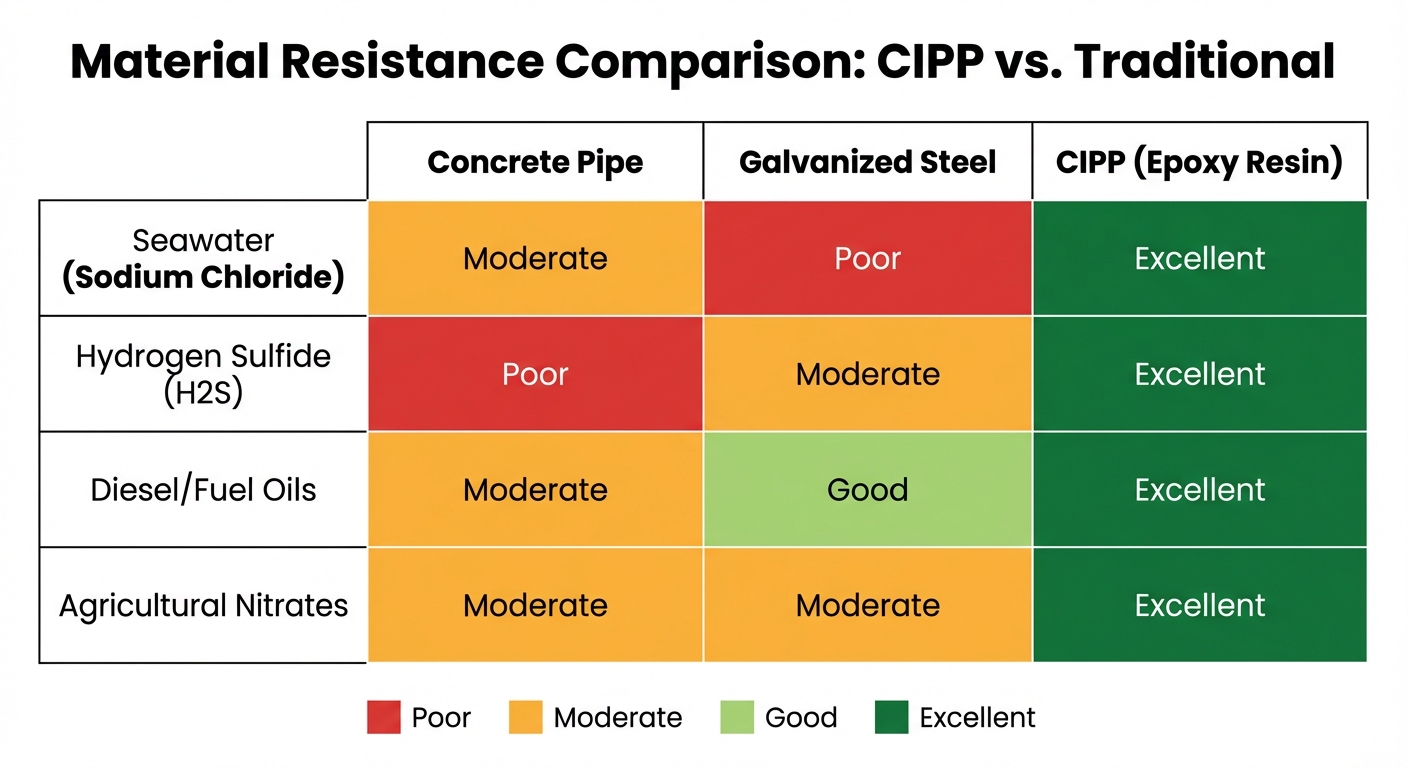
The key to epoxy’s performance lies in its molecular structure. During the curing process, liquid epoxy resin undergoes a chemical transformation called cross-linking. Individual molecules bond together to form a three-dimensional polymer network. This fully cured material is hydrophobic, meaning it repels water rather than absorbing it—a critical property in environments where complete pipe drying below the water table is impossible. The cross-linked structure is also non-porous at the microscopic level. Unlike concrete’s interconnected pore network or the grain boundaries in metal, cured epoxy presents no pathways for chloride ion penetration. The aggressive ions that destroy traditional materials simply cannot reach the host pipe through an intact epoxy liner. This impermeability effectively halts the corrosion cycle at its source. Hydrocarbons that dissolve bituminous coatings have minimal effect on cross-linked epoxy. The same molecular structure that resists water penetration also resists dissolution by diesel, fuel oils, and hydraulic fluids common in port environments. Extended exposure testing per ASTM D543 standards consistently rates epoxy as “excellent” for resistance to these chemicals.
Electrical Isolation: Breaking the Corrosion Circuit
One of epoxy’s most valuable properties in marine applications is often overlooked: it’s a dielectric material—an electrical insulator. Galvanic corrosion requires a complete electrical circuit: an anode, a cathode, an electrolyte (saltwater), and a conductive path between the anode and cathode. By coating a metal pipe with epoxy, the electrical circuit is broken. Electrons cannot flow between corroding sites, effectively “switching off” the electrochemical battery that drives saltwater corrosion. This principle applies whether the liner is installed in a metal pipe or used to protect concrete reinforcement. In either case, the epoxy barrier interrupts the electrochemical processes that all other methods can only slow down.
Structural Independence: A Pipe Within a Pipe
CIPP technology isn’t just chemically resistant—it’s structurally engineered. Systems designed to ASTM F1216 standards use calculations that account for soil loads, hydrostatic pressure, and surface traffic loads. The liner is designed to function as a standalone pipe, independent of the deteriorated host structure. This structural independence is particularly critical in port environments where container handling equipment exerts extraordinary ground pressure. A top-pick container stacker can weigh over 100 tons when fully loaded. The drainage pipes beneath paved areas must support these loads without deflection that could cause joint separation or liner damage. The cured liner’s wall thickness is engineered based on the specific loading conditions at each location. In areas under heavy traffic, thicker liners or reinforced systems ensure the new pipe can carry all structural demands for its entire design life—typically specified at 50+ years for epoxy systems in industrial applications.
Installation Advantages in Secure Environments
The trenchless installation process offers operational advantages that are particularly valuable in port settings. A CIPP installation crew typically consists of 3-5 technicians with a specialized inversion truck and curing equipment. The small footprint and rapid installation timeline (typically 24-48 hours from setup to completion) minimize security management burden in TWIC-regulated zones. No excavation means no contaminated soil handling, no spoils transport requiring secure escort, and no pavement restoration. The work can often be scheduled during off-peak hours or maintenance windows without requiring extended terminal shutdowns. For port authorities managing complex operational schedules, this flexibility translates directly to maintained revenue and supply chain reliability.
Beyond Repair Costs: The Total Value Proposition for Maritime Infrastructure
When port authorities evaluate infrastructure rehabilitation options, the decision extends beyond simple cost comparison. A comprehensive lifecycle cost analysis reveals how seemingly higher upfront investment in advanced technology delivers superior total value.
The Hidden Costs of Traditional Methods
Dig-and-replace projects incur substantial indirect costs that don’t appear in construction estimates. Excavating in a working port terminal requires:
- Traffic and operational diversions that reduce loading capacity during construction
- Security escorts for large crews and heavy equipment entering secure zones
- Contaminated soil testing, handling, and disposal under environmental regulations
- Pavement restoration including base preparation and multiple asphalt layers
- Extended project timelines that multiply daily operational impact costs
A project that appears comparable in direct construction cost can easily double or triple in total cost when these factors are included. The operational disruption alone—lost cargo handling capacity during repairs—often exceeds the construction cost for critical infrastructure. CIPP installation minimizes or eliminates most indirect costs. The small crew, minimal equipment footprint, and rapid timeline reduce security management burden, eliminate spoils transport, avoid pavement removal, and restore the pipeline to full service in days rather than weeks.
Design Life and Maintenance Requirements
Traditional pipe replacement using concrete or coated metal materials typically carries a design life of 20-50 years, depending on coating quality and environmental exposure. In aggressive marine environments, actual service life often falls below design estimates as corrosion accelerates beyond anticipated rates. Joint-based systems remain vulnerable to infiltration and exfiltration throughout their service life. Even when properly installed, joint seals degrade over time, requiring periodic inspection and maintenance. Tree root intrusion through joints is a common failure mode in older systems, particularly in unpaved areas. CIPP creates a jointless, seamless liner that eliminates these vulnerabilities. The monolithic structure prevents root intrusion and provides 100% containment throughout the rehabilitation section. Industry case studies document CIPP installations in marine environments with 25-30 year service records showing no degradation, supporting the specified 50+ year design life for properly installed systems.
Environmental Compliance and Risk Mitigation
Pacific Northwest ports operate under strict NPDES Industrial Stormwater General Permits with specific discharge benchmarks for metals, hydrocarbons, and suspended solids. Leaking pipes compromise compliance in multiple ways:
- Groundwater infiltration increases the volume requiring treatment
- Exfiltration of industrial contaminants into surrounding soil creates environmental liability
- Emergency bypass events during repair activities may require permit modifications
A fully contained, leak-free drainage system ensures that all runoff reaches treatment facilities and that discharge meets permit requirements. This compliance certainty reduces regulatory risk and potential penalties while protecting the reputation of both the port authority and tenant operators.
Carbon Footprint and Sustainability Goals
Many port authorities have adopted aggressive carbon reduction targets aligned with state and federal climate commitments. Infrastructure maintenance choices directly impact progress toward these goals.
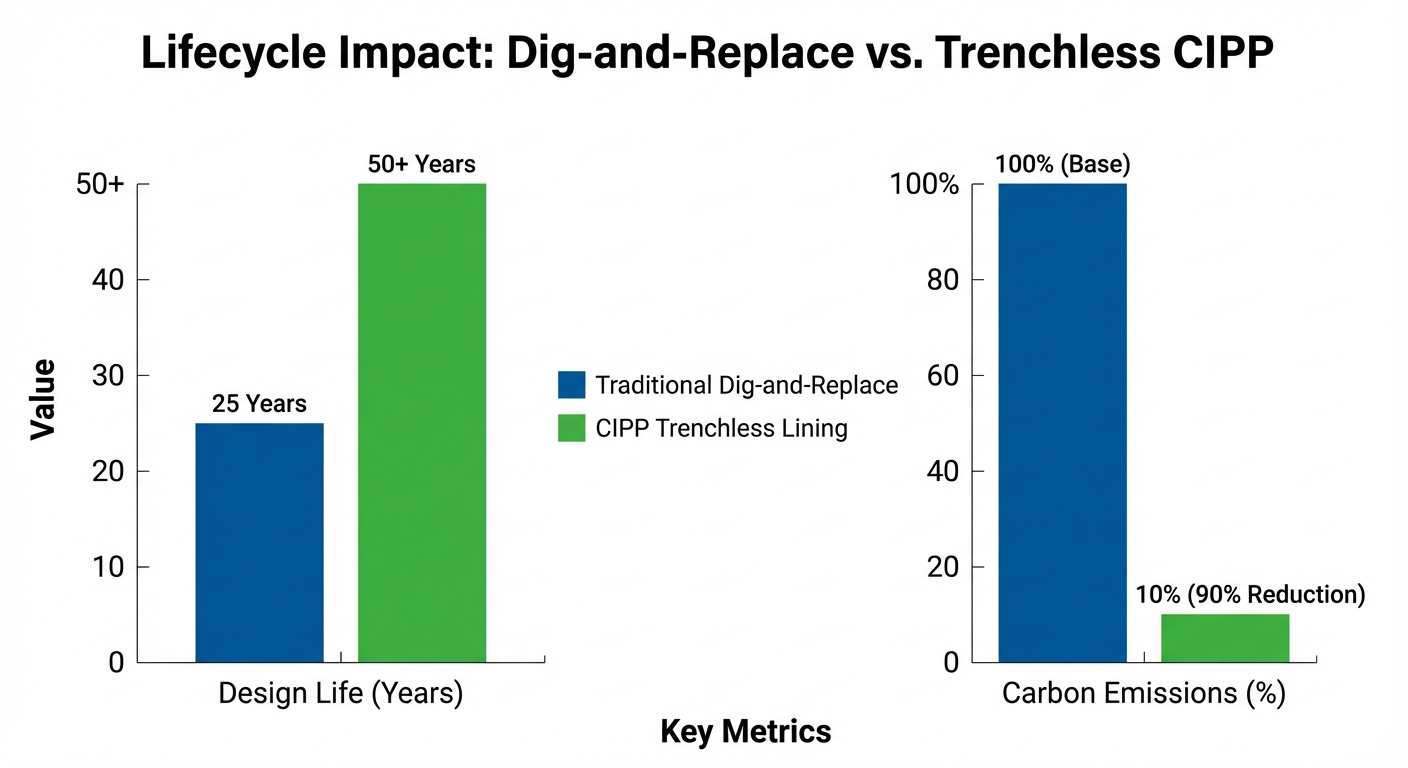
Research by the North American Society for Trenchless Technology demonstrates that trenchless methods can reduce project greenhouse gas emissions by up to 90% compared to traditional excavation. The reduction comes from:
- Eliminated or minimized heavy machinery operation
- No spoils trucking and disposal
- Reduced new material manufacturing and transport
- No pavement material production and installation
- Shorter project duration reducing equipment runtime
For port authorities with sustainability commitments, CIPP rehabilitation offers a pathway to infrastructure maintenance that aligns with climate goals rather than working against them.
Final Thoughts
The Pacific Northwest’s maritime environment presents an extreme infrastructure challenge—one where traditional pipe materials and repair methods cannot deliver the longevity and reliability that modern port operations demand. The synergistic assault of saltwater corrosion, microbial activity, industrial contamination, and seismic risk creates conditions that accelerate failure cycles and drive mounting maintenance costs. Cured-In-Place Pipe lining with 100% solids epoxy resins offers more than a rehabilitation technique—it represents a materials science solution to a fundamental chemistry problem. By creating an impermeable, chemically inert, electrically insulating barrier that functions as a standalone structural pipe, CIPP addresses every mechanism of maritime degradation. The technology delivers documented 50+ year service life in the most aggressive environments, backed by ASTM engineering standards and decades of field performance data. The strategic value extends beyond technical performance. Minimal operational disruption, enhanced environmental compliance, dramatically reduced carbon footprint, and simplified security management make trenchless rehabilitation the economically rational choice when lifecycle costs and operational impacts are properly accounted for. As climate change intensifies storm surges and accelerates sea-level rise, coastal infrastructure faces growing pressure. Port authorities that proactively adopt advanced rehabilitation technologies position themselves to maintain operational resilience while protecting the pristine waterways that define the Pacific Northwest. The ports of Seattle, Tacoma, Portland, and Vancouver aren’t just regional assets—they’re critical nodes in global commerce. Protecting their underground infrastructure with proven materials science ensures these gateways remain resilient for generations, safeguarding both economic vitality and environmental stewardship.
Protect Your Maritime Infrastructure
Is your facility facing drainage challenges in a corrosive environment? Sarkinen Industrial Pipelining specializes in advanced CIPP technology for maritime and industrial applications throughout the Pacific Northwest.
Citations and References:
- AMPP (NACE International). (2024). Chloride Stress Corrosion Cracking. https://www.nace.org/resources/general-resources/corrosion-basics/group-1/chloride-stress-corrosion-cracking
- U.S. Environmental Protection Agency (EPA). (2007). Preservation of Water Quality Infrastructure. https://www.epa.gov/sites/default/files/2015-09/documents/2007_05_22_criteria_biocriteria_ephacap_biocorr.pdf
- Roads & Bridges. (2020). Corrugated Steel Pipe Durability. https://www.roadandbridges.com/drainage/article/10664947/corrugated-steel-pipe-durability
- The Northwest Seaport Alliance. (2024). Cargo Statistics and Stories. https://www.nwseaportalliance.com/stats-stories/cargo-stats
- ASCE. (2024). Report Card for Washington’s Infrastructure. https://infrastructurereportcard.org/state-by-state-infrastructure-report-card/washington/
- Oregon Office of Emergency Management. (2024). Cascadia Subduction Zone. https://www.oregon.gov/oem/hazardsprep/Pages/Cascadia-Subduction-Zone.aspx
- ScienceDirect. (2023). Epoxy Coating – An Overview. https://www.sciencedirect.com/topics/engineering/epoxy-coating
- ASTM International. (2021). ASTM F1216-21: Standard Practice for Rehabilitation of Existing Pipelines and Conduits by the Inversion and Curing of a Resin-Impregnated Tube. https://www.astm.org/f1216-21.html
- ASTM International. (2021). ASTM D543-21: Standard Practices for Evaluating the Resistance of Plastics to Chemical Reagents. https://www.astm.org/d543-21.html
- Transportation Security Administration (TSA). (2024). TWIC® – Transportation Worker Identification Credential. https://www.tsa.gov/for-industry/twic
- Washington State Department of Ecology. (2024). Stormwater Runoff and Pollution. https://ecology.wa.gov/Water-Shorelines/Water-quality/Runoff-pollution/Stormwater
- North American Society for Trenchless Technology (NASTT). (2024). Trenchless Rehabilitation Methods. https://nastt.org/about-trenchless/rehabilitation/